
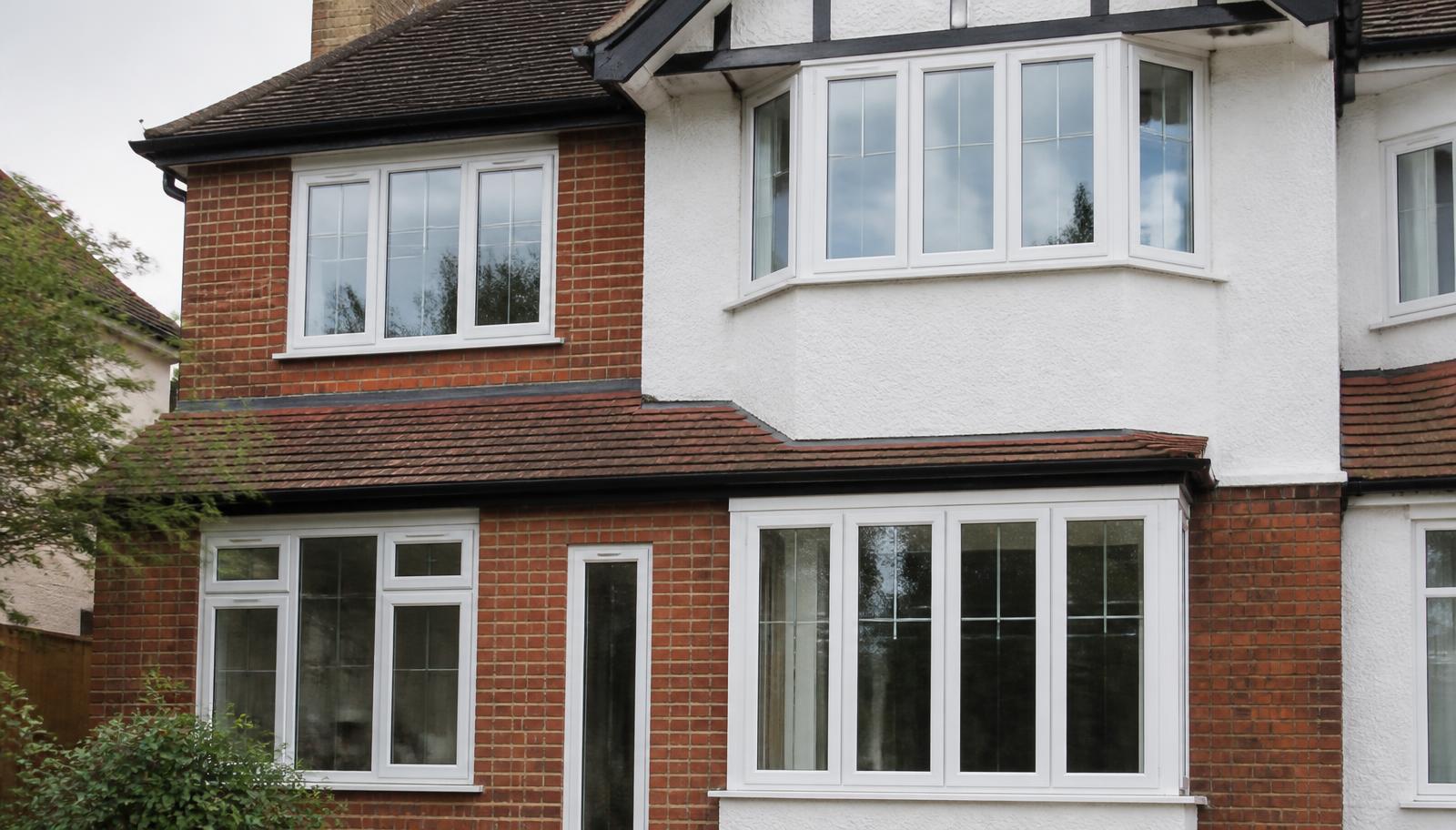
uPVC Windows
uPVC Windows Made to Your Openingand Installed AcrossSouth West London
The warmest, lowest-maintenance option per pound spent, made to your surveyed sizes, not trimmed down from a standard, and fitted by the company that made it.
Windows manufactured in-house · FENSA-certified installation
- Manufactured in our own factory
- Installed by our own teams
- Made to measure, never off the shelf
- FENSA-certified installation
The service
What this covers andwhen it is the right call
What the service covers
We manufacture and install uPVC windows in a full range of profiles, configurations and finishes, from single casements to multi-light bays, tilt-and-turn units and sash-style windows for properties where the appearance must stay traditional but the budget or the maintenance profile does not suit timber.
Who it is for
Homeowners replacing tired frames, landlords who need durable windows across a portfolio, and anyone whose priority is thermal comfort and no ongoing painting. Woodgrain foils and colour finishes mean uPVC no longer means white plastic by default.
When it is needed
When frames are discoloured or distorted, when sealed units have misted because the seal has failed, when handles and hinges have worn to the point of not closing properly, when draughts are noticeable, and when heating bills reflect single glazing or a first-generation double glazed unit.
Why professional manufacture matters
A uPVC window is only as good as its fabrication and its fit. Welded corners, correctly specified reinforcement, properly packed and fixed frames and clean sealing are what separate a window that performs from one that flexes, drops and lets water past. Made to survey and installed by the maker, those variables stay under one roof.
What it costs to wait
The problem does notstay the same size
Deferring a failed window is rarely a saving: the losses are simply spread across the heating bill and the fabric of the building.
Misted units never recover
Once a sealed unit's edge seal fails, moisture is inside the cavity permanently. Cleaning does nothing, the insulating performance has already gone, and the view stays clouded.
Water tracks into the reveal
Perished gaskets and failed external seals let water past the frame, where it reaches plaster and paint. The redecoration cost typically arrives before the window is finally replaced.
Security degrades quietly
Worn hardware and single-point locking on older frames leave openings that no longer close tightly and no longer resist force in the way a modern multi-point system does.
The common mistake: cheapest quote, standard sizes
A frame ordered to the nearest standard size and packed out on site produces wide trims, an uneven reveal and joints that rely on silicone to do a frame's job.
Our process
Five stages, one company,no handovers in between
Site survey and inspection
Every opening is measured individually, and we check the cill, lintel and reveal condition rather than assuming the existing frame's size is the right one to copy.
Specification and drawings
Profile, configuration, opening lights, glazing, colour or woodgrain finish and hardware are confirmed in writing before manufacture.
Manufacture in our factory
Frames are cut, reinforced, welded, cleaned and glazed to the survey drawings on our own production line.
Installation by our fitting teams
Old frames are removed, openings prepared, new frames fixed plumb and square with correct packing, then sealed and made good internally and externally.
Verification and FENSA certification
Openers are adjusted and tested, locks checked, and qualifying replacement work is certified under FENSA against the relevant Building Regulations.
What you get
Specific outcomes,not general assurances
Immediate thermal improvement
Modern multi-chamber profiles with well-specified sealed units make the biggest difference where the existing windows are single glazed or early double glazed.
No repainting cycle
The finish is the material. Maintenance is washing the frames and keeping drainage paths clear.
Quieter rooms
Acoustic laminated glazing options make a measurable difference on elevations facing busier South West London roads.
Multi-point security
Locking is engineered into the sash and frame rather than relying on a single catch.
Made to your openings
Survey-driven manufacture removes the packers-and-trim compromise that standard-size ordering forces.
Factory-direct pricing
You are buying from the manufacturer, so the reseller margin that sits inside most installer quotes is not there.
In detail
Materials, methods andthe situations they suit
Profiles and configurations
Casement windows remain the most common configuration: fixed lights combined with side-hung and top-hung openers, arranged to suit the elevation and ventilation. Tilt-and-turn units suit upper floors and rooms where cleaning access matters. Bay and bow windows require a structural approach to the corner posts and the head, which is decided at survey rather than on site.
Sash-style uPVC windows reproduce the vertical sliding action and much of the appearance of a traditional sash. They are a sensible answer where a property wants the look without the timber maintenance and where no conservation condition requires genuine joinery.
Glazing specification
Sealed double glazed units with low-emissivity coatings and warm-edge spacers are the standard specification, with argon fill where appropriate. Toughened and laminated safety glass is used wherever the position of the glazing requires it, low-level panes, doors and side panels in particular.
Beyond the standard, we specify acoustic laminated glass for road noise, obscure glass in a range of patterns for bathrooms and overlooked elevations, and solar control glazing for large south-facing openings that would otherwise overheat in summer.
Colours, foils and hardware
White remains the most common finish, but coloured foils and woodgrain effects, including light and dark oak and grey shades, are widely used, with the option of a woodgrain outside and a white internal face so the room stays bright.
Handles, hinges, restrictors and locking systems are chosen for the size of the sash and how it will be used. Restrictors matter in upper-floor rooms; easy-clean hinges matter where external access is difficult; and heavier sashes need hardware rated for their weight.
Ventilation, escape and regulations
Replacement windows have to satisfy Building Regulations on thermal performance, safety glazing, ventilation and, in habitable rooms, means of escape. Trickle ventilation and clear escape opening dimensions are calculated at specification stage.
Because qualifying installations are self-certified under FENSA, the compliance certificate is produced as part of the job rather than chased afterwards, which matters when the property is sold and the paperwork is requested.
Homeowners, landlords and developers
For a homeowner the decision is usually comfort and appearance. For a landlord it is durability, security and predictable maintenance across several properties. For a developer it is repeatable units delivered to a programme.
The same factory serves all three, which is why a single-window replacement in Balham and a multi-plot order for a developer are manufactured to the same tolerances.
Straight answers
Questions we are askedabout upvc windows
- How much do uPVC windows cost?
- It depends on the number of openings, sizes, configuration, glazing and finish. We price from a survey so the figure holds, and because we manufacture there is no middleman margin inside it.
- How quickly can the windows be installed?
- We confirm a manufacturing and installation window in writing after the survey. Production is in-house, so the schedule is ours to manage rather than a supplier's to allocate.
- How long do uPVC windows last?
- Modern profiles and correctly fabricated sealed units are a long-term component of the building. Practical lifespan is driven by the quality of the fabrication, the glazing units and the installation more than by the material itself.
- Can misted double glazing be repaired?
- The sealed unit can often be replaced without changing the frame, provided the frame and hardware are sound. If the frame has distorted or the hardware has failed, replacing the unit alone is a short-term fix.
- Do you offer colours other than white?
- Yes, coloured and woodgrain foils are available, including different finishes inside and out.
- Is your uPVC installation FENSA certified?
- Qualifying replacement windows are installed under FENSA certification and self-certified against the relevant Building Regulations, so you get the certificate you need for a sale.
- Will new windows reduce road noise?
- A well-installed modern window helps, and acoustic laminated glazing helps considerably more. If noise is the priority, tell us at survey so the glazing is specified for it.
- Can you replace windows in a flat or mansion block?
- Yes, subject to the freeholder's or managing agent's requirements, which frequently specify appearance and colour. We specify to those requirements.
- Do you remove and dispose of the old windows?
- Removal and making good are part of the installation, which is carried out by our own fitting teams rather than subcontracted.
- Which South West London areas do you cover?
- Wimbledon, Richmond, Putney, Kingston upon Thames, Wandsworth, Clapham, Battersea, Balham, Twickenham and the surrounding postcodes.
Related services
Where we work
uPVC Windows supplied and installed across South West London and the surrounding postcodes.
Next step
Get uPVC windows pricedby the people who make them
Send the basics and we will book a survey. You will see the specification and the programme in writing before anything is manufactured.
- Manufactured in our own factory, then installed by our own teams
- FENSA-certified installation on qualifying replacement work
- Office open Mon – Fri, 8am – 4pm
Tell us about your project
One short form. We will confirm the next step by phone or email.
We reply during opening hours: Mon – Fri, 8am – 4pm. Prefer to talk? Call 01483 968616.