
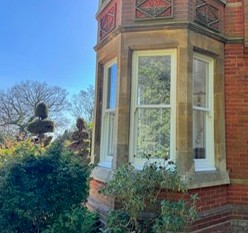
Timber Windows
Timber Sash & Casement WindowsMade in Our Own Joinery Shop,Installed Across South West London
Period-correct timber windows built to your survey drawings and fitted by the people who made them, so the sightlines, the paint finish and the fit are one company's responsibility, not three.
Windows manufactured in-house · FENSA-certified installation
- Manufactured in our own factory
- Installed by our own teams
- Made to measure, never off the shelf
- FENSA-certified installation
The service
What this covers andwhen it is the right call
What the service covers
We manufacture and install timber windows for South West London homes: box sash, spring sash, flush casement, stormproof casement, and fixed lights with matched glazing bars. Each unit is drawn from a physical site survey, machined in our joinery shop, glazed, factory-finished in your chosen colour, and then hung by our own fitting teams. You are buying the window and the installation from the same organisation, which is the reason a timber window either performs for decades or starts sticking in its first winter.
Who it is for
Owners of Victorian, Edwardian and inter-war properties across Wandsworth, Clapham, Putney, Balham and Wimbledon where the original joinery has reached the end of its life, and owners in conservation areas who have a planning condition that rules out plastic. It also suits homeowners who simply prefer the depth and shadow line of a timber section, which no extruded profile reproduces convincingly.
When it is needed
Typical triggers are sashes that no longer run, rot at the bottom rail or cill where water has sat, paint failing within a year of being applied, draughts you can feel from a metre away, single glazing you can no longer heat around, and rattling in wind. If putty is falling out or the meeting rails no longer line up, the window is past patching.
Why professional manufacture matters
Timber windows fail at the joints, at the cill and at the finish. A window machined to the survey, jointed properly, end-grain sealed before assembly and factory-coated in controlled conditions behaves entirely differently from a stock unit trimmed to fit on site. Because we make the unit, a millimetre problem is corrected on our production line rather than negotiated between an installer and a distant supplier.
What it costs to wait
The problem does notstay the same size
Timber windows rarely fail suddenly. They degrade quietly, and the cost of the repair rises every season the work is deferred.
Water gets into the structure, not just the frame
Once a cill or bottom rail is holding water, the damage moves inwards to the lintel, the plaster and the internal reveal. A window replacement becomes a window replacement plus making good, plus redecoration.
Draughty single glazing is a permanent bill
Every winter with failed seals and single glazing is heat you are paying for and losing through the opening. The saving never arrives while the decision is postponed.
The common mistake: patch, fill, repaint
Filler over soft timber holds for a season. The next coat traps moisture behind it and accelerates the rot. Repeated patch repairs frequently cost more over five years than manufacturing the window correctly once.
The second mistake: buying on profile, not on survey
Ordering a nominally standard size for a hand-built Victorian opening guarantees packers, oversized trims and an unequal reveal. It looks wrong from the pavement and it never seals properly.
Our process
Five stages, one company,no handovers in between
Site survey and inspection
We measure every opening individually, check the cill, lintel and reveal condition, and record the existing sightlines, horns and glazing bar layout so the replacement reads correctly from outside.
Specification and drawings
Timber species, section sizes, glazing spec, ironmongery and paint colour are agreed and confirmed in writing before anything is cut. Conservation or planning requirements are built into the drawing at this stage.
Manufacture in our factory
Your windows are machined, jointed, sealed, glazed and factory-finished on our own production line, to the survey drawings, on a schedule we control rather than queue for.
Installation by our fitting teams
Existing units are removed, openings prepared, new windows fitted plumb and square, sealed externally and made good internally by the same company that manufactured them.
Verification and FENSA certification
Every opening light is tested for operation and closure, the installation is checked against the survey, and qualifying replacement work is certified under FENSA against the relevant Building Regulations.
What you get
Specific outcomes,not general assurances
Correct on the first fit
Units are built to your measured openings, so there are no wide packers, no oversized cover trims and no compromise reveals.
Sightlines that suit the building
Section sizes, horns and glazing bars are specified to the elevation rather than to a catalogue profile.
A finish applied in factory conditions
Coating is applied to prepared, dry timber under controlled conditions rather than brushed onto an installed frame in London weather.
Warmth you notice immediately
Modern sealed double glazed units and proper draught seals remove the cold edge that single-glazed sashes push into the room.
Windows that keep operating
Sashes balanced and hung to the actual opening keep running years after a forced-in unit has started to bind.
One point of accountability
Survey, manufacture, installation and certification sit with one company, so nothing is handed between a supplier and a fitter.
In detail
Materials, methods andthe situations they suit
Timber species and section
We work in engineered softwood and hardwood. Engineered timber, laminated in three layers with the grain alternated, is dimensionally more stable than solid stock, which is why it holds a paint finish and resists twisting in an exposed London elevation. Hardwood is specified where a stained finish is wanted or where a very slim section has to carry a large pane.
Section size is a design decision, not a default. A slender Georgian bar and a heavy Victorian bottom rail communicate different periods, and a replacement that ignores the original section reads as new from across the street even when the material is right. We record the existing sections at survey and match or refine them deliberately.
Sash windows: box, spring and their details
Traditional box sash windows run on cords, pulleys and weights inside a boxed frame. Spring balance sashes achieve the same movement in a slimmer frame using a concealed balance, which suits openings where the original box has been lost or where the reveal will not accommodate one.
The details that make a sash window look right are the horn profile, the meeting rail depth, the putty-line or bead detail on the glazing, and the run-through or lambs-tongue bar profile. Each of these is a machining choice made before manufacture, and each is available to us precisely because we are cutting the timber rather than ordering a finished unit.
Casement windows and configuration
Flush casements sit level with the frame face for a clean, traditional appearance; stormproof casements overlap the frame and shed water more aggressively, which suits exposed elevations. Both are made to your opening, with fixed lights, side-hung openers, top-hung vents and dummy sashes arranged to match the elevation.
Configuration also drives ventilation and escape. Where a room requires an emergency escape opening, the clear opening dimension is calculated at design stage rather than discovered at installation.
Glazing, finishes and ironmongery
Glazing options include standard sealed double glazed units, low-iron and toughened or laminated glass where safety or acoustic performance requires it, and slim-profile units for period sightlines. Obscure glazing is specified for bathrooms and side elevations facing a neighbouring window.
Finishes are factory-applied in your colour, including colour matching to a specified reference. Ironmongery, fasteners, stays, lifts, pulleys and restrictors, is selected to the period and to how the window is used daily, in a finish chosen with the rest of the joinery.
Residential and trade work
For homeowners, the work is usually a whole-house replacement phased elevation by elevation, or a single problem opening addressed before it spreads. For builders and developers, we supply and, where required, install to a programme, with units manufactured to the architect's schedule and delivered to site on an agreed date.
Across South West London the property stock varies sharply, a Twickenham riverside cottage, a Wimbledon villa and a Battersea mansion block all need different answers. Manufacturing rather than reselling is what makes those different answers possible on the same programme.
Straight answers
Questions we are askedabout timber windows
- How much do timber windows cost in South West London?
- Price depends on size, timber species, glazing specification, finish and the number of opening lights, so an honest figure comes from a survey rather than a phone call. Because you buy from the manufacturer, there is no reseller margin added on top of the unit price.
- How long does the whole process take?
- Lead time is driven by material, finish and order size. We give you a manufacturing and installation window in writing at survey stage, and because production is in-house we control that schedule rather than queue behind a supplier's other customers.
- Can you match windows in a conservation area?
- Yes. We build to a specified sightline, glazing bar layout, horn detail and colour. Bring us the planning condition or the existing window and we specify to it.
- Do I need planning permission to replace timber windows?
- Like-for-like replacement is often permitted development, but conservation areas, Article 4 directions and listed buildings change that. We tell you what we can see from the survey and specify to whatever condition applies.
- Are the windows FENSA certified?
- Qualifying replacement windows are installed under FENSA certification and self-certified against the relevant Building Regulations, so you receive the certificate you need for a future sale.
- How long will timber windows last?
- A correctly manufactured, factory-finished timber window with maintained coatings is a long-term component of the building rather than a consumable. Lifespan is determined by the quality of the joint, the sealing of end grain and how the finish is maintained.
- What maintenance do they need?
- Wash the frames, keep drainage paths clear, check the coating annually on exposed elevations and recoat before the finish breaks rather than after. Ironmongery benefits from occasional lubrication.
- Can you replace just one or two windows?
- Yes. Single openings are common where rot or a failed unit has forced the issue, and matching the rest of the elevation is straightforward because we manufacture to the survey.
- Do you handle emergency or urgent situations?
- Our office is open Monday to Friday, 8am to 4pm. Call and explain the situation and we will tell you honestly what can be brought forward and what cannot.
- Do you work with builders on timber window packages?
- Yes, trade supply is a core part of the business, with factory-direct pricing and scheduled deliveries for builders, contractors and developers working across London.
Related services
Where we work
Timber Windows supplied and installed across South West London and the surrounding postcodes.
Next step
Get your timber windowsspecified and priced properly
Send us the basics and we will arrange a survey. You will get a specification in writing before anything is manufactured: no pressure appointment, no guesswork.
- Manufactured in our own factory, then installed by our own teams
- FENSA-certified installation on qualifying replacement work
- Office open Mon – Fri, 8am – 4pm
Tell us about your project
One short form. We will confirm the next step by phone or email.
We reply during opening hours: Mon – Fri, 8am – 4pm. Prefer to talk? Call 01483 968616.